
Welcome to the Music Department

Students take part in a range of integrated activities and are encouraged to improve their performing, composing and listening skills while developing knowledge of musical styles, traditions and cultures.

If your child would like to have instrumental lessons, please click here.

Please read the Terms and Conditions for Music lessons here.

Curriculum Content

Key Stage 3

Year 7

In year 7 students have one lesson of music a week, they look at different styles of music and production of music:

  • Keyboard Skills – Students will be taught how to play the keyboard using the correct technique. Students will learn how to play single melody lines in their right hand and how to add in an appropriate accompaniment in the left.

  • Folk Music – Students will study the cultural and social aspects of Folk Music alongside developing their rehearsal and performance skills.

  • Descriptive Music – Students will study the instruments of the orchestra alongside classical performance pieces. Students will compose their own piece of descriptive music.

  • TV Theme Tunes and Advert Jingles – Students will learn how to compose to a brief and understand how to compose a short and catchy melody.

  • Rap Music – Students will study the cultural, social and political aspects of rap music alongside developing their songwriting and performance skills.

Year 8

In year 8, students continue to develop their rehearsal, compositional and performance skills:

  • Blues – Through performance and composition, students will study the conventions of blues music including improvisation and structure. Students will study the cultural, social and political aspects of Blues music.

  • Rock & Roll – Students will study the cultural, social and political aspects of Rock & Roll and the influences that blues music had on the genre. Students will continue to build upon their rehearsal and performance skills.

  • Reggae – Students will perform reggae songs focusing on the social contexts of reggae music. Students will build their performance skills as part of band and will learn about syncopation.

  • Popular Music – Students will study the arrangement of a popular song through performance. Students will study how to compose a popular song and build on their songwriting skills.

  • Solo Performance – Students will study how to rehearse in a safe, effective and enjoyable way, whilst learning a piece of music of their choice. Students will showcase their performance skills in a final solo performance of KS3.

Year 9

Students in Year 9 will undertake a number of assignments designed to broaden their musical knowledge and ability whilst also introducing them to the requirements of the GCSE Music qualification. These assignments include:
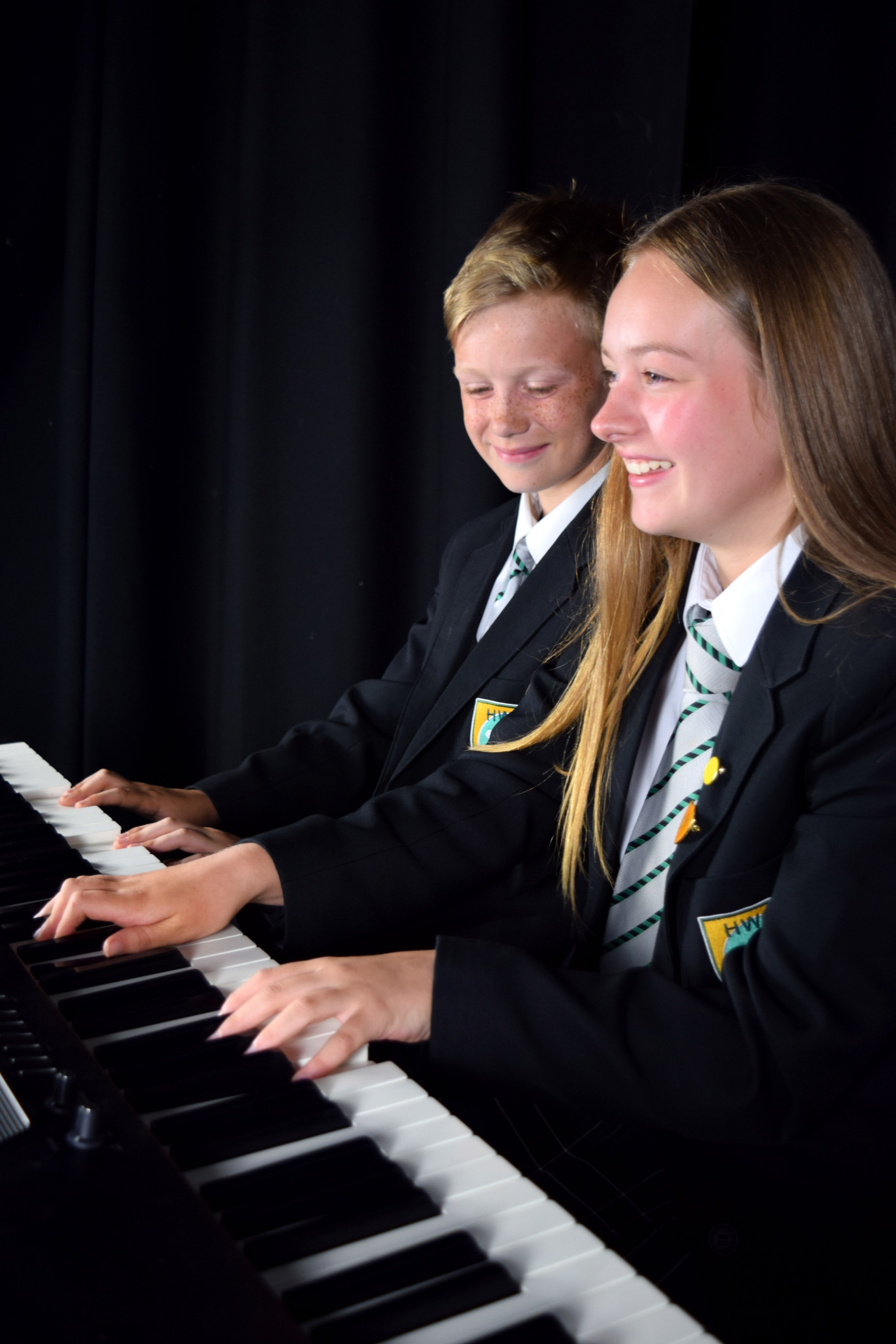
  • Band Skills: Students will be asked to work on a song of their choice whilst working as part of a band. Students will study how to rehearse and communicate with one another effectively.

  • Cover Songs: Students will study how to use their own unique sound to create and effective cover song. The cover songs will then be used as part of a performance with the Year 9 Drama students.

  • Musicals: Students will work in small groups to compose a piece of music for a specific scene in a musical using ideas from musical songs they have performed.

  • Film and Game Music: Students will work in small groups and use a mixture of technology and live instruments to compose a soundtrack for a short piece of film.

  • Song Writing: Students will build upon the Popular Music unit in year 8 and learn the theory behind songwriting whilst composing their own songs.

Key Stage 4

Year 10 & 11

Students in Years 10 & 11 will study towards the Eduqas GCSE Music qualification. Students will continue to develop their skills in the following areas ready for assessment towards the end of Year 11:

Candidates perform a solo and an ensemble piece, assessed on technical control, expression, and interpretation. Resulting in a non-exam assessment worth 30% of the candidates overall grade.

Candidates create two compositions: a free composition in any style, and another in response to a set brief from the exam board. Resulting in a non-exam assessment worth 30% of the candidates overall grade.

Students listen to and analyze music from four areas of study, evaluating its musical elements, context, and musical language. Assessed by written examination worth 40% of the candidates overall grade.

Areas of study:

  • Musical Forms and Devices (based on the Western Classical tradition)
  • Music for Ensemble
  • Film Music
  • Popular Music